



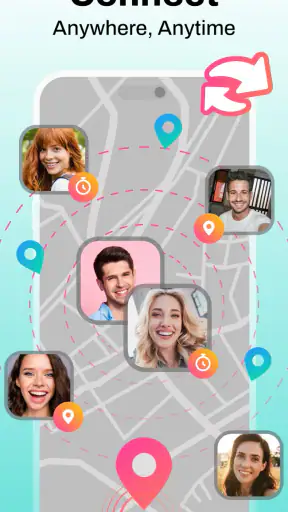
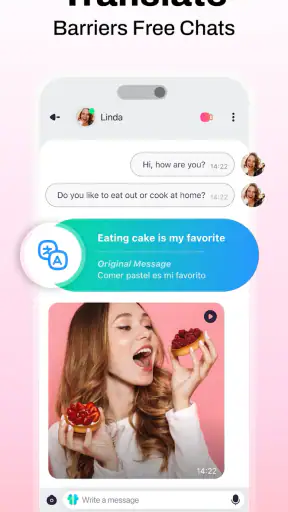
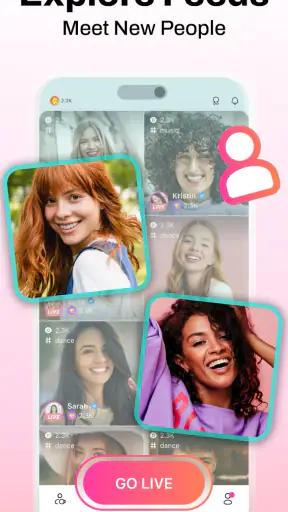


I tried Nozy: Random Live Video Chat as a social app built around immediate contact rather than carefully arranged messaging. Its basic appeal is easy to understand: open the app, enter a live conversation, watch people streaming, or appear on camera yourself. That makes it feel very different from a normal social network, where you usually spend time building a profile, browsing a feed, and deciding what to say before anyone responds.
My first impression was that Nozy changes the rhythm of communication. Conversations begin with almost no preparation, and that can be refreshing when I want a quick human interaction instead of another silent scroll. It can also be tiring, because the same speed that creates spontaneity leaves less room to think, filter, or establish trust. I would describe it as a place for brief social encounters, not a replacement for close friendships or deliberate communication.
The app comes from Fepar Inc. and is free to install, although it includes optional purchases ranging from $0.99 to $134.99 per item. It is intended for mature users aged 17 and above, which is important to keep in mind before treating it like a casual app for everyone in the household. On Android, it supports devices running version 6.0 or later, and the current version is 1.7.1.1.
How Nozy changes the way a conversation starts
Less preparation, more immediate contact
Most social apps reward preparation. I can edit a message, choose a photo, wait for a reply, or simply observe from the edge of a feed. Nozy takes away much of that distance. Its focus on random live video chat means the central question is not “What should I post?” but “Am I ready to interact right now?” That small change has a noticeable effect on my behavior.
When I use it with the right expectation, the lack of ceremony is its strongest quality. I do not need to maintain a polished public identity before starting a conversation. A short exchange can remain just that: a short exchange. For someone who feels that conventional social media has become too performative, this directness may feel more natural.
At the same time, random contact is not automatically meaningful contact. The other person may be shy, distracted, talkative, or simply looking for a different kind of interaction. I learned to treat the first moments as a quick compatibility check rather than a promise of a good conversation. If the tone feels awkward, ending the interaction is usually more sensible than forcing it.
Who benefits from this communication style
Nozy is a good fit for people who enjoy meeting unfamiliar personalities without committing to a long exchange. It can suit someone spending an evening alone who wants a little conversation, a user practicing casual spoken English with strangers, or a person who likes the unpredictability of live social spaces. It may also appeal to people who are bored with passive feeds and want communication that asks for an immediate response.
I would be more cautious recommending it to someone who wants stable communities, carefully moderated interest groups, or dependable contact with known friends. A messaging app is usually better when the goal is clarity and continuity. A group platform is usually better when I want to discuss a hobby with people who share a clear interest. Nozy makes more sense when the experience itself—meeting someone unexpected—is the point.
A realistic everyday use
Imagine finishing work, having twenty minutes before dinner, and feeling socially restless without wanting to arrange a call with a friend. I might open Nozy for a few quick conversations, stay only while the exchange feels comfortable, and leave when my attention starts to fade. That is a realistic use because it treats the app as a small social interval, not as an obligation to remain available.
The same situation can go badly if I open it while multitasking. If I am cooking, answering messages, or already tired, live conversation becomes another demand on my attention. The app works best when I decide in advance how much energy I can give it. That simple habit prevents a spontaneous session from turning into an unexpectedly long or frustrating one.
Watching live streams versus joining live chat
The combination of live streams and direct conversation gives Nozy two different modes. Watching is less demanding: I can observe the atmosphere and decide whether I want to participate. Live chat is more personal and requires quicker judgment. I found that moving between those modes changes the emotional pressure of the app. Watching can feel like browsing, while joining asks me to become part of the scene.
This distinction matters for new users. Someone who is uncertain about appearing on camera can begin by observing live activity and learning what kind of pace feels comfortable. Someone who dislikes being a spectator may prefer to go straight into conversation. I appreciate that these are different ways to use the same social space, even though neither removes the need for sensible boundaries.
Conversation flow is the real test
The quality of Nozy depends less on elaborate tools and more on how quickly two strangers find a workable rhythm. The opening can be simple, but the next minute determines whether the interaction feels relaxed or forced. I had better results when I used a clear, ordinary greeting and asked an open question rather than trying to impress the other person.
Short conversations benefit from clarity. Saying what kind of chat I am looking for—casual conversation, language practice, or just a quick hello—can prevent mismatched expectations. It also gives the other person an easy way to decide whether to continue. This is one of the most useful habits I developed with the app: define the tone early instead of waiting for confusion to build.
Random video chat can make silence feel more uncomfortable than it would in text. In a written conversation, I can pause and compose a response. On camera, a pause is visible, and that may encourage people to fill every second with noise. I found that accepting a little silence works better than rushing. If the exchange still feels strained after a few attempts to connect, leaving politely is a reasonable choice.
Why spontaneity can also reduce clarity
The speed of the format has a trade-off. A person may seem friendly in a brief exchange without giving me enough context to understand their intentions. Likewise, I may be judged quickly based on my appearance, background noise, or the way I answer an opening question. Nozy encourages fast impressions, but fast impressions are not always accurate.
That is why I would not use a random live conversation to make important decisions, share sensitive details, or assume a stranger is trustworthy. The app is designed around meeting people, not around proving who they are. Keeping the conversation light until I understand the tone is not unfriendly; it is simply good communication hygiene.
The attention cost of live socializing
Nozy asks for a type of attention that ordinary feeds do not. A feed can be paused, skimmed, or ignored. A live conversation expects a response in the moment. Even when the exchange is enjoyable, I am listening, watching facial cues, thinking of a reply, and deciding whether to continue. That makes a short session more mentally active than passive browsing.
I noticed that the app can create a loop of constant switching: start a conversation, decide whether it works, move on, and immediately prepare for another person. That pattern may be entertaining, but it can also make social contact feel disposable. If I keep going without a clear stopping point, I may finish the session having spoken to several people while remembering very little about anyone.
My practical solution is to use Nozy in defined windows. I choose whether I have the energy for one meaningful conversation or a few brief encounters, and I stop when the experience begins to feel repetitive. This is especially useful for people who are prone to endless scrolling. The app’s live format can be more engaging than a feed, which is precisely why it deserves a deliberate time boundary.
When live streaming is better than direct chat
Watching a live stream may be the better choice when I want social atmosphere without the responsibility of carrying a private exchange. It gives me a chance to observe how people present themselves and what kind of energy is common in the app. However, watching can still consume attention, particularly when the content is fast-moving or emotionally intense.
I would avoid treating streams as background entertainment while doing tasks that require concentration. A live video can pull my focus back repeatedly, and the feeling of “just checking for a moment” can turn into a longer interruption. Nozy is most useful when I choose whether I am there to participate or observe, instead of leaving both modes open while trying to do something else.
Boundaries should be set before the first chat
The mature age rating is a clear reminder that this is not a children’s social space. I would not hand the app to a younger user simply because the download is free or the interface seems approachable. Live contact with strangers requires judgment, and the responsibility for using it safely begins before the camera is switched on.
I recommend deciding in advance what I will not share. That includes my home address, daily routine, private contact details, financial information, and anything that could identify where I live or work. I also avoid showing documents, screens, parcels, or background details that reveal more than I intended. These precautions are easy to overlook when a conversation feels friendly.
A useful boundary is to keep the first interaction inside the app’s immediate social context. I do not feel pressured to move to another service, exchange personal accounts, or continue a conversation that has become uncomfortable. A stranger who reacts badly to a reasonable boundary has already provided a good reason to end the chat.
How I handle uncomfortable conversations
There is no benefit in debating with someone who is rude, manipulative, or inappropriate. I leave the interaction rather than trying to repair it, and I avoid treating persistence as proof that the person is interested in a genuine conversation. In a random chat environment, control over my own participation is more valuable than winning an argument.
I also try not to confuse awkwardness with danger. Some conversations are simply mismatched, and a short goodbye is enough. Other situations create pressure, demand private information, or ignore a clear request to stop. Those deserve a firmer response: end the conversation, use any available in-app reporting or blocking controls, and do not continue contact elsewhere.
Because Nozy centers on live interaction, camera comfort matters as much as personal privacy. I can choose a neutral setting, check what is visible behind me, and use headphones if the surroundings are noisy. These are not cosmetic details. A distracting background can reveal personal information, while poor audio can make a harmless conversation feel confusing or tense.
Free access and the role of optional purchases
The free entry point makes it easy to try Nozy without committing money at the start. That is helpful for deciding whether random live conversation actually suits me. The optional purchase range is broad, however, so I would pay attention before confirming anything inside the app. A free download does not mean every part of the experience is necessarily free.
My advice is to test the basic social rhythm first. If I do not enjoy the conversations, spending money will not solve the underlying mismatch. If I do enjoy the app, I would still consider purchases only when I understand exactly what they provide and whether they improve my experience enough to justify the cost. This is particularly important for anyone who tends to make impulse purchases during an exciting live session.
How it compares with familiar alternatives
Compared with a conventional messaging app, Nozy is faster but less predictable. Messaging gives me a known contact, a written record, and time to formulate what I mean. Nozy offers surprise and immediacy, but the other person may disappear from my social world as quickly as they arrived. I prefer messaging when accuracy, privacy, or an ongoing relationship matters most.
Compared with a traditional social feed, Nozy is more interactive and less polished. A feed lets me shape how I appear through selected posts and edited media. Live chat exposes more of the ordinary moment, which can feel honest but also leaves less room to correct misunderstandings. I prefer Nozy when I want a direct encounter, and a feed when I want to browse calmly.
Compared with community-based platforms, it has a weaker sense of shared purpose. A hobby group gives conversation a built-in subject and makes it easier to find people with similar interests. Nozy begins with the person rather than the topic. That can lead to surprising exchanges, but it can also produce more dead ends. Users who need structured discussion will probably be happier elsewhere.
Who should skip Nozy
I would skip it if random video contact makes me anxious, if I dislike being seen by strangers, or if I am looking for a controlled way to maintain existing relationships. I would also avoid it during periods when my attention is already stretched. The app’s immediacy is a feature only when I have enough mental space to respond thoughtfully.
It is not my first recommendation for anyone seeking professional networking, serious dating decisions, private support, or dependable group collaboration. Those situations benefit from identity, context, and continuity. Nozy can start a conversation, but it does not automatically supply the trust or structure those purposes require.
Who is most likely to enjoy it
I think the strongest audience is made up of curious adults who enjoy brief, unscripted conversations and understand that not every match will be rewarding. It also works for people who want to practice being more comfortable with spontaneous speaking. The key is accepting the app on its own terms rather than expecting it to behave like a private messenger or an organized community.
The app has clearly found a sizeable audience: it has passed one million installs, carries an average rating of 4.5 from around eleven thousand ratings, and has more than five hundred written reviews. Those figures suggest that the concept connects with many users, but they do not remove the personal question of whether random live interaction fits my temperament. I would treat the popularity as a reason to try it, not as a guarantee that every session will be good.
My final view after using the app
Nozy is most interesting when I use it as a small change of pace from ordinary social media. It puts conversation before profile-building and makes me decide, in real time, how open and attentive I want to be. That can make communication feel lively and human. It can also expose the weaknesses of rushed contact: shallow exchanges, mismatched expectations, and the temptation to keep switching from one person to the next.
I recommend starting slowly, protecting personal details, and setting a stopping point before opening a live session. I would keep the first conversations light, leave when the tone is wrong, and resist paying for anything until the free experience has proved useful. Those habits make a noticeable difference because the app gives users freedom, but that freedom also requires self-control.
For me, Nozy is a worthwhile social experiment rather than an all-purpose communication tool. It is a good choice when I want a spontaneous chat with someone unfamiliar and have the attention to handle the unpredictability. It is the wrong choice when I need privacy, continuity, or a clear subject. The best reason to use it is curiosity, paired with firm boundaries.


